Key Takeaways
- Most brands are invisible in AI search. 73% never get mentioned by ChatGPT or similar tools—not because they’re bad at what they do, but because they haven’t adapted to how AI finds and recommends businesses.
- SEO is still the foundation. AI systems pull answers from indexed content. If your site isn’t ranking, AI search visibility tactics won’t help yet. You need both working together.
- Content ecosystems beat random blogging. One-off posts don’t build the kind of authority AI looks for. Connected content—pieces that link together and cover your topic from different angles—is what works.
- Recency matters more than you’d expect. 71% of ChatGPT citations pull from content published between 2023 and 2025. Anything older tends to get skipped.
- AI visitors convert 4.4x better. These aren’t people casually browsing. They requested a recommendation and received one. They’re ready to move.
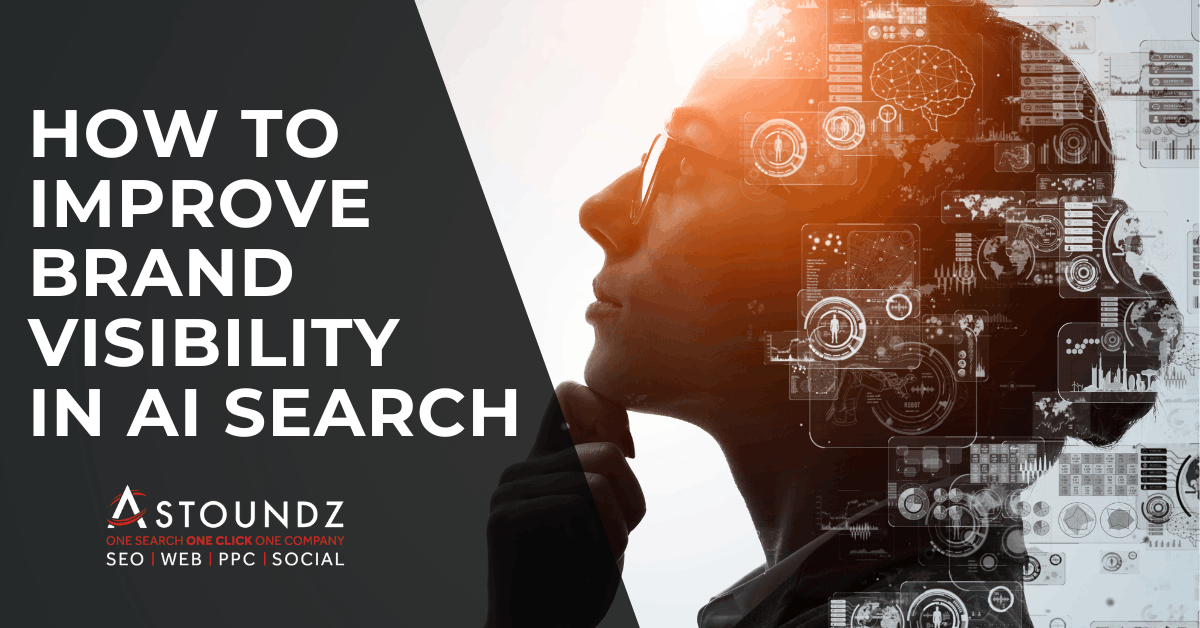
I’ve been watching something shift in how people find businesses over the past year. What I’ve discovered is both fascinating and concerning. Most brands haven’t caught up to this change yet. Many don’t even realize it’s happening.
Right now, while you’re reading this, someone is asking ChatGPT for a recommendation in your industry. Someone else just bypassed every search result because Google’s AI Overview gave them exactly what they needed at the top of the page.
If your brand doesn’t show up in those AI-generated responses? You’re essentially invisible to people who are ready to invest in exactly what you offer.
That’s not being dramatic—research shows that 73% of brands are never mentioned by AI systems. Not because they’re bad at what they do, but because they haven’t adapted to how AI finds and recommends businesses. This is exactly the kind of shift we help businesses navigate through our comprehensive internet marketing services and specialized AI consulting.
The encouraging news? It’s not mysterious. Businesses that take the time to understand this now will have a real advantage over their competitors.
Why AI Search Visibility Matters for Your Brand
The numbers are wild. TechCrunch reports ChatGPT handles two and a half billion prompts daily. Not monthly — Daily.
What I’ve learned is that strong SEO services haven’t become less important—they’ve become more important. Think of SEO as the foundation that everything else sits on top of. Building your foundation on rock instead of shifting sand ensures longevity.
AI systems pull answers from indexed content, so Google AI Overviews draw on search results and structured data. So if your site has technical issues or your content isn’t ranking, all the AI optimization in the world won’t help much—you need to fix the foundation first through solid website services and technical SEO.
The traffic shift is significant. Visitors from AI tools jumped 527% last year, while regular search grew maybe 4%, and Google AI Overviews now appear on over half of all searches.
Here’s how I see it. SEO gets you in the game. AI search visibility gets you recommended. You can’t skip either one.
How to Improve AI Search Engine Visibility: What Actually Works
I’ve spent months testing these approaches with our clients. What I’ve discovered has genuinely surprised me. The strategies that work aren’t what you’d expect. Some of the conventional wisdom we’ve all been following no longer applies.
Here’s what I keep seeing: businesses publishing content just to check a box. Random blog posts with no real strategy connecting them to anything meaningful. AI systems don’t reward that kind of scattered approach. Honestly, neither do the people you’re trying to reach.
What does get AI’s attention? When you demonstrate genuine expertise through comprehensive content marketing services that go beyond surface-level topics.
Instead of hoping one 800-word article will do the work, what’s proving effective is building complete ecosystems of connected content. Each piece explores subjects from multiple angles. Each piece strengthens the others.
This shift represents something much larger—it’s part of the broader move toward marketing automation that AI embodies. These systems are becoming remarkably sophisticated at recognizing patterns of real authority. They consistently favor businesses that demonstrate deep expertise across interconnected content rather than those publishing sporadically without purpose.
Here’s the statistic that completely changes how we approach this work: research shows that AI search visitors convert at 4.4x the rate of traditional search.
What sets these visitors apart is that they aren’t just casual browsers clicking through multiple search results — they requested a specific recommendation. They received one they trust, indicating they’re ready to move forward. A fundamental evolution in search engine marketing strategy is shifting from casting a wide net to delivering the precise, trusted answers AI provides.
Google AI Overviews: Different Rules
This is where the landscape gets particularly interesting. Google AI Overviews don’t work like ChatGPT at all—they’re completely different engines drawing from completely different sources.
Google’s AI Overviews pull heavily from your own indexed pages. Your structured data markup. Your Google Business Profile management. This makes it especially important for local businesses that want to show up when people search for services in their area.
ChatGPT operates entirely differently. Research shows that 41% of its brand recommendations come from authoritative industry lists and roundups. You know the ones I’m talking about—those “Best accountants in Houston” articles, or “Top web designers in Texas” features that industry publications put out regularly.
Here’s a question worth asking yourself: if someone searched for “best [your service] in [your city]” right now, would your business show up on those authoritative lists? Would you appear in the industry roundups that AI systems are learning from?
Because those mentions and citations are exactly where ChatGPT develops its understanding of who the trusted players are in each market.
If you’re not sure where you currently stand in this landscape, that’s exactly the kind of comprehensive audit we help businesses work through. We identify gaps and develop strategies to build your authority and consistently earn recommendations across the platforms that matter.
How to Get Your Brand Mentioned in AI Search Results
Your website matters, obviously. But AI is also paying attention to what other people say about you—and that’s the part most businesses forget about entirely.
I’ve seen companies with beautiful websites completely ignored by ChatGPT, while competitors with outdated sites are recommended. The difference? Those competitors had reviews scattered across industry platforms, their names appearing in trade publications, and maybe a podcast interview or two. They showed up in “best of” roundups. AI noticed.
This is where online reputation management stops being defensive and starts actually driving growth. And if building that presence manually sounds exhausting (because it is), ask us about ASTOUNDZ BLAST—it gets your brand mentioned across hundreds of reputable sources without the months of outreach.
Here’s a stat that should get your attention: 71% of ChatGPT citations come from content published in the last three years. Anything older tends to get skipped entirely. If your most recent authoritative mention is from 2021, you don’t have an authority problem—you have a recency problem wearing an authority costume.
One more thing. ChatGPT and Google AI Overviews recommend different brands for the same query 62% of the time. Same exact question, different answers. So no, you can’t just pick one platform and call it done.
Build Connected Content That Compounds
This is why we build complete strategies. Not random publishing. We covered this shift in our digital marketing trends 2026 guide. AI search visibility isn’t theoretical anymore.
That’s encouraging, actually. You don’t need to rank number one to get cited—you need the most helpful answer to whatever question someone asks. Different game entirely.
This shift toward AI-mediated discovery is what the industry now calls Generative Engine Optimization (GEO)—the practice of optimizing content specifically for AI-powered search experiences rather than traditional rankings. LinkedIn’s Big Ideas 2026 report identifies GEO as “set to replace SEO” as the primary channel for brand discovery.
What I’ve found is that GEO isn’t separate from SEO—it’s built on top of it. You still need that solid foundation, but you also need content that AI systems can understand, trust, and confidently cite.
What earns citations? Direct answers that solve what people searched for. Good schema markup behind the scenes. Recent publication dates. And original insights you can’t find copy-pasted elsewhere—real data, actual case studies, genuine expertise.
Cookie-cutter content dilutes what makes you unique. AI systems are improving at distinguishing authentic, experience-based content from templated information that could apply to anyone.
AI systems also prefer certain content formats. Comparison tables work particularly well (research shows they increase citation likelihood by 40%). FAQ sections optimized for voice search. Recent comprehensive guides with specific data.
AI Search Platforms: Key Differences
| Platform | Primary Data Sources | Best Content Types | Citation Style |
|---|---|---|---|
| ChatGPT | Third-party mentions, authoritative lists | Comprehensive guides, expert interviews | Brand name + context |
| Google AI Overviews | Indexed web pages, structured data | FAQ sections, comparison tables | Direct quotes with links |
| Perplexity | Real-time web crawling | Recent research, breaking news | Numbered source citations |
| Claude | Training data + web search | In-depth analysis, balanced perspectives | Contextual references |
Understanding these differences helps you create content that each platform can actually use. That’s where the real craft comes in—not just creating content, but creating content that works within each system’s specific approach.
Content Ecosystem Strategy for AI Visibility
This is why we approach content ecosystems the way we do. Pre-mapped architecture. Cornerstone content. Supporting clusters. Strategic interlinking. All planned before anyone writes anything.
Cookie-cutter approaches water down what makes you unique. (I keep saying that because it’s true.) Strategic ecosystems build authority that AI actually recognizes.
What does a working ecosystem look like? Here’s the framework: You start with comprehensive cornerstone content that goes deep on your major topics (like this guide). Then you build supporting articles that branch off those cornerstones, each addressing a specific question and linking back—like our guides on content ecosystems and nested Google department listings.
You’re also earning mentions from third-party sources, which builds the credibility AI looks for. And you’re keeping your entity information consistent everywhere you show up online—same business name, same services listed, same location details across every platform.
When all of that works together, you’re building something that compounds over time instead of starting from scratch every month.
The length of each piece matters, too. Longer content ranks better because it signals real expertise. Comprehensive content also provides material worth distributing. The goal isn’t to entertain—it’s to answer the questions people already ask Google while being genuinely helpful. That’s what AI systems want to cite.
Building a content ecosystem from scratch can feel overwhelming. That’s what we do—reach out, and we’ll map out what it looks like for your business.
Questions I Keep Getting Asked
How do I check if my brand appears in AI results?
Start with free testing. Pull up ChatGPT or Perplexity and ask the kinds of questions your customers would ask—things like “best [service] in [city]” or “how do I [solve specific problem].” Then run those same searches on Google and see if AI Overview boxes pop up at the top.
Free Tools for AI Visibility Audits:
- Google Analytics (which you probably already have)—look for unusual traffic spikes from organic search or direct visits that could indicate AI mentions you didn’t know about.
- HubSpot’s AI Search Grader gives you a comprehensive audit across ChatGPT, Perplexity, and Gemini. It’s free and takes about five minutes to run.
- Manual Testing works best when you ask AI tools the exact questions your customers would ask. This one’s honestly my favorite—you learn patterns no dashboard shows you.
- Google AI Overview Monitoring—just search your key terms and note which brands get cited in those overview boxes at the top.
For systematic tracking, tools such as Otterly.AI, Brand Radar, and Geoptie monitor AI mentions across keywords. But I’d recommend starting with manual checking first. Takes maybe fifteen minutes, and you’ll understand your visibility better than any automated report.
Does SEO still matter if AI is changing everything?
Absolutely. AI systems pull from indexed content—if your site isn’t ranking, they have nothing to cite. Think of SEO as the root system. Without healthy roots, nothing above ground thrives. AI visibility is what you build on top of that foundation.
What’s different about ChatGPT versus Google AI Overviews?
Google pulls heavily from your own indexed pages and structured data. ChatGPT leans on third-party mentions and authoritative lists—what others say about you matters more than what you say about yourself. The same question asked on both platforms gives different answers 62% of the time. You need strategies for both.
What content gets cited by AI search the most?
Direct answers to specific questions. Comparison tables (40% more likely to get cited). FAQ sections. Recent publication dates—71% of citations come from 2023-2025 content. Original insights beat generic advice every time. AI crawlers can tell the difference between a real forest and plastic trees in a lobby.
How long until I see results in AI Search Visibility?
Depends on where you’re starting. High-authority sites with solid technical foundations can see content showing up in AI overviews within days—their root system is already established. If you’re starting from scratch, expect 3-6 months before the sprouts shoot up. Once the ecosystem takes hold, it compounds—each piece of content feeds the others, and the whole forest starts communicating in ways AI crawlers recognize.
Your First Month
Where do you actually stand right now? That’s the first thing to figure out. Pull up ChatGPT, ask the questions your customers would ask, and see what happens. Do the same on Google—look for those AI Overview boxes at the top. You might be surprised. (Or concerned.) HubSpot’s free AI Search Grader takes five minutes if you want a baseline across multiple platforms.
From there, it’s less about creating more content and more about planting strategically. Not seeds scattered in the wind hoping something grows—intentional pieces designed to grow together. Plan your internal linking like roots feeding water back to the trunk. Everything should connect to your main service pages with a purpose.
Then you nurture. One solid cornerstone piece, thoroughly covering your topic. Get it indexed. Earn some mentions—industry lists, reviews on platforms that actually carry weight, and guest contributions where your expertise adds value. These external signals work like sunlight on your ecosystem. And if manual outreach feels like it takes forever (because it does), ask us about ASTOUNDZ BLAST to get distributed across hundreds of sources at once, rather than one pitch at a time.
The businesses tending their gardens now—They’re building root systems that compound. The ones still waiting to see how AI search shakes out—their competitors planted last quarter. The sprouts are already showing.
Ready to Dominate AI Search Results?
At ASTOUNDZ, we don’t just talk about AI visibility—we implement complete strategies that get our clients cited, recommended, and found across every AI platform that matters.
Our AI Visibility Approach:
- Foundation Audit – SEO, content gaps, entity consistency across platforms
- Content Ecosystem Development – Cornerstone content with strategic cluster architecture
- Authority Building – Systematic approach to earning third-party mentions
- Strategic Distribution – Our ASTOUNDZ BLAST distributes your content across hundreds of reputable platforms simultaneously
Why This Works: While your competitors are still figuring out that AI search exists, you’ll have comprehensive content earning citations across ChatGPT, Google AI Overviews, Perplexity, and every platform launching next quarter.
AI Visibility Audit: We’ll check where your brand currently appears in AI overviews and mentions, identify your biggest citation gaps, and map out a 90-day action plan to establish authority.
Questions about where your brand stands? Ready to see how strategic content distribution can accelerate your AI visibility through our content ecosystem and BLAST approach?
Schedule your free AI visibility audit and let’s talk through your strategy.